If you’re shopping for a retractable awning in South Jersey, three names come up constantly: Aristocrat, SunSetter, and Marygrove. We sell and install Aristocrat awnings, so we’re obviously biased—but we’ve also been in the awning business for over 35 years. We’ve seen what lasts, what fails, and what homeowners end up calling us about years later.
This is our honest breakdown of where these brands actually differ—not marketing claims, but real-world differences we see on patios across South Jersey.
Fabric: Acrylic with Teflon® Coating vs. Polyester
✓ Aristocrat (NorthPort Fabric)
Solution-dyed acrylic with Teflon® coating. The color is baked into the fiber during manufacturing, not applied to the surface. Acrylic gives you added rigidity, better water repellency, and noticeably less wrinkling than polyester. The Teflon coating repels water and resists staining. 12-year fade warranty—best in the industry.
✗ Most Competitors
Many retractable awnings use 100% polyester fabrics. Polyester is typically less rigid, less water-resistant, and more prone to visible wrinkling than a solution-dyed acrylic with Teflon coating. It also tends to carry a shorter fade warranty.
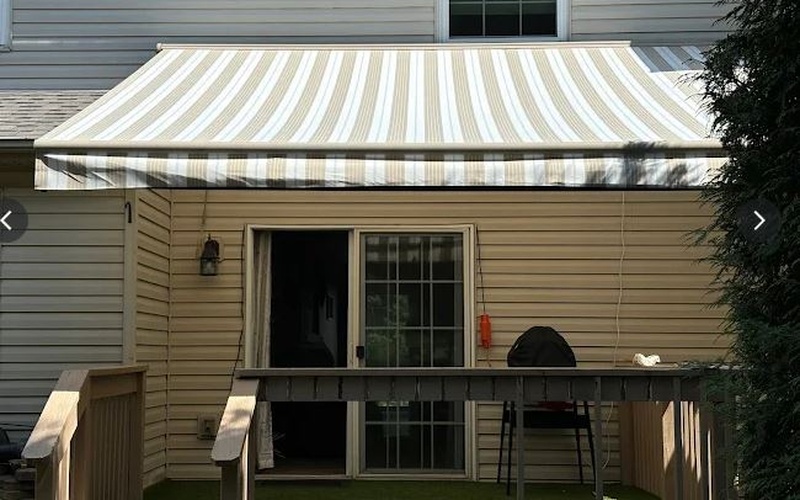
A competitor’s awning showing visible fabric wrinkles shortly after installation. Thinner polyester fabrics are more prone to this.
Motors: Somfy vs. No-Name
✓ Aristocrat (Somfy Motors)
Somfy is the world’s leading motorization brand for awnings and window treatments. Their motors use torque sensing technology that ensures the awning rolls all the way in every single time—year after year. Consistent, reliable retraction that protects your fabric.
✗ SunSetter & Marygrove
Typically use unbranded or proprietary motors without torque sensing. After a few years, these motors can start stopping 6 inches short of full retraction—leaving that last bit of fabric exposed to weather. That exposed strip gets rained on, develops mildew, and eventually rots. Then you’re replacing fabric years earlier than you should.
Why torque sensing matters: A motor with torque sensing detects resistance and adjusts automatically. It knows when the fabric is fully wound. Without it, the motor stops based on a timer or limit switch that drifts out of calibration over time—and that’s when you get the “almost but not quite retracted” problem.
Water Drainage: Built-In Rain Gutters vs. Tilting the Awning
This is one of the biggest differences you’ll never see in a brochure. When it rains, where does the water go?
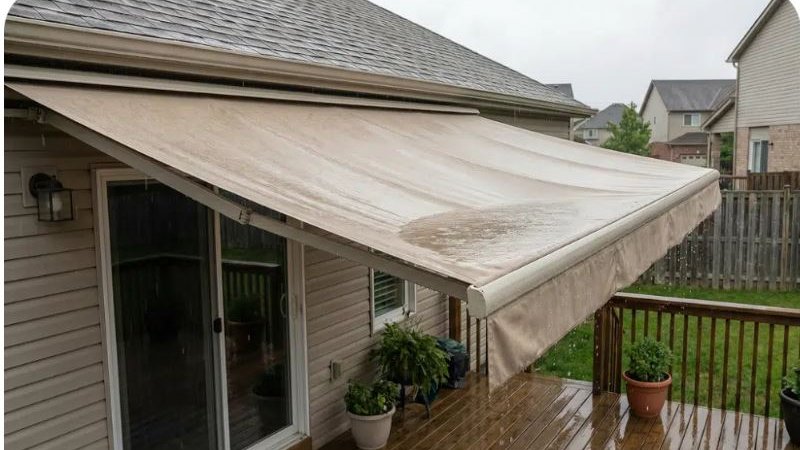
✗ Ponding
No drainage system at all. Water pools on the fabric, stretches it out, and puts dangerous stress on the arms and frame. The added weight can cause permanent sagging and even structural failure in heavy rain.
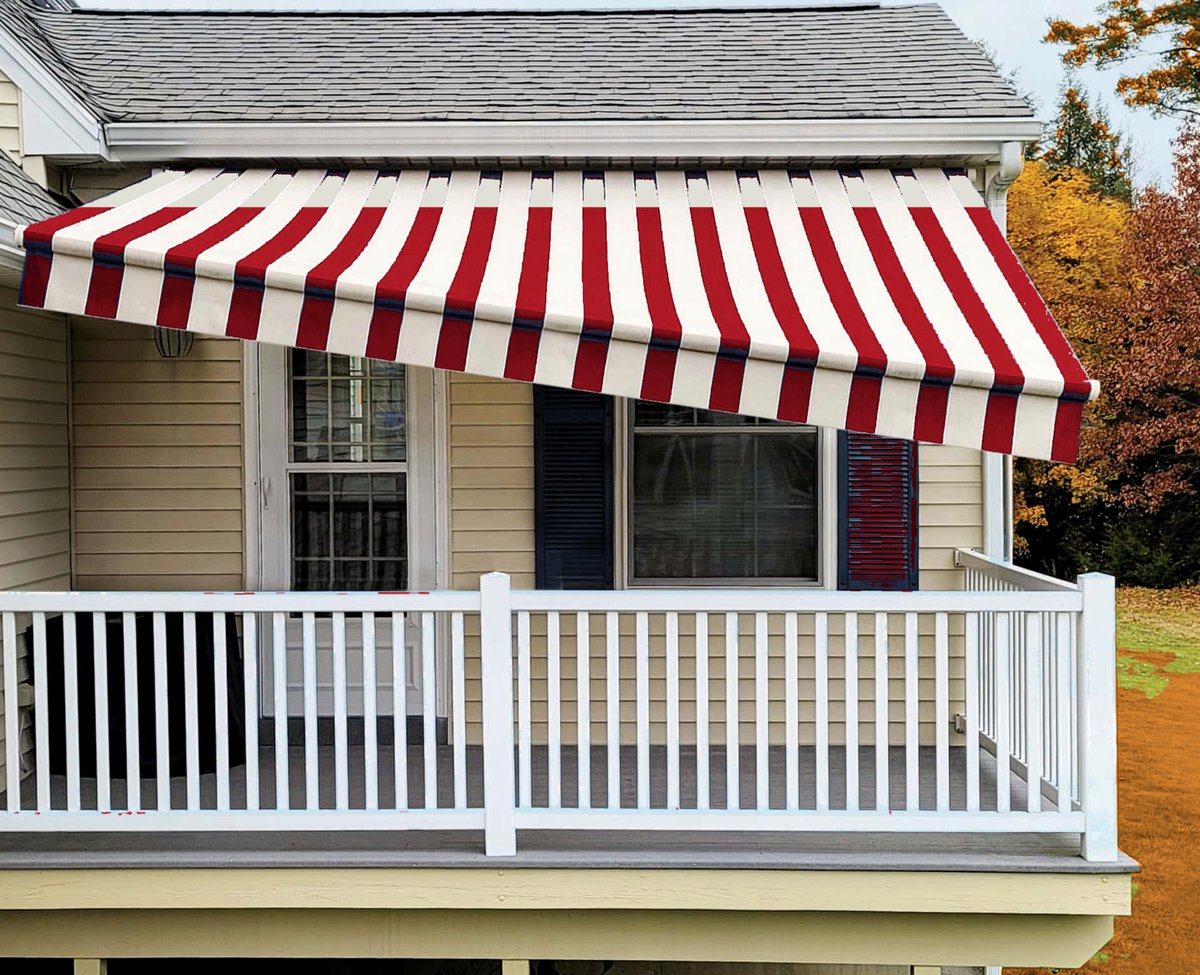
⚠ Their fix — pitch to drain
A common design on other awnings: the fabric wraps all the way around the front bar with no integrated gutter, so the awning has to be pitched at a steeper angle to shed water off one side. It can look uneven and send water cascading off one end.
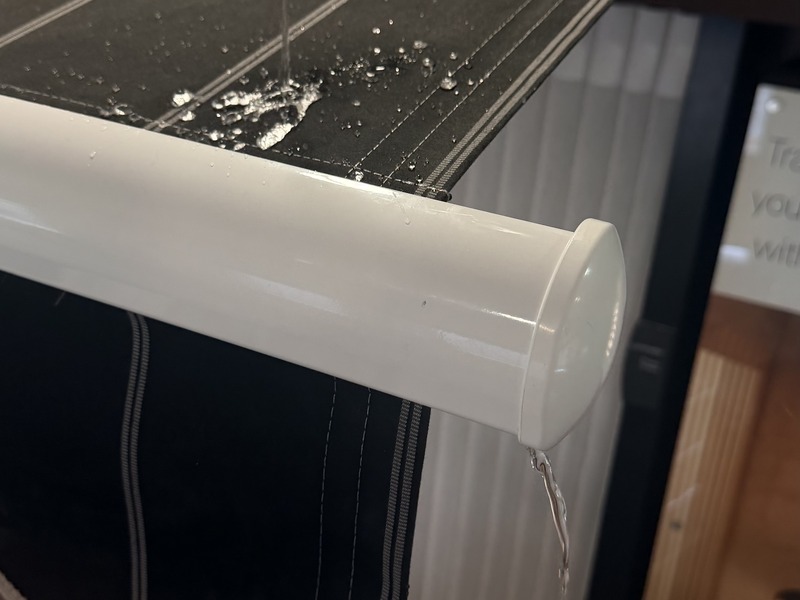
✓ Our built-in rain gutter
Water hits the Teflon-coated fabric, beads up, and channels directly through the front bar—all while the awning stays perfectly level. No ponding, no cascading, no out-of-level installation. Engineered drainage, not a workaround.
Many retractable awnings are built with the fabric wrapped all the way around the front bar and no integrated rain gutter. The only way to shed water is to install the awning at a steeper pitch so it runs off one side. This can look uneven, cascade water off one end, and still allow pooling in heavy rain.
Aristocrat’s Estate and Manor models have a built-in rain gutter system integrated into the front bar. Water hits the Teflon-coated fabric, beads up, and channels directly through the front bar—all while the awning stays perfectly level. No ponding, no cascading, no out-of-level installation.
Watch the rain gutter in action at our Pennsauken showroom—water channels right through the front bar.
Shoulders: The Joint That Holds Everything Together
The shoulder is the joint where the arm meets the mounting bar—it bears the full load of the extended awning and takes the most stress over time. This is one of those details you’d never think to check, but it makes a real difference in how long the awning lasts.
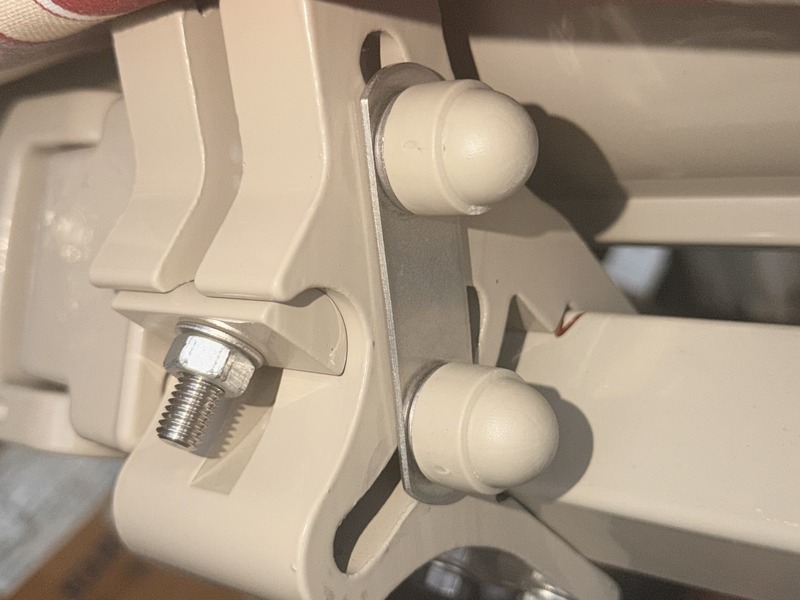
✗ Their two-bolt shoulder
Two bolts mean fewer load points and more stress on each one. Over time the joint develops play and loosens, reducing stability and shortening the awning’s lifespan. Exposed hardware collects debris and moisture.
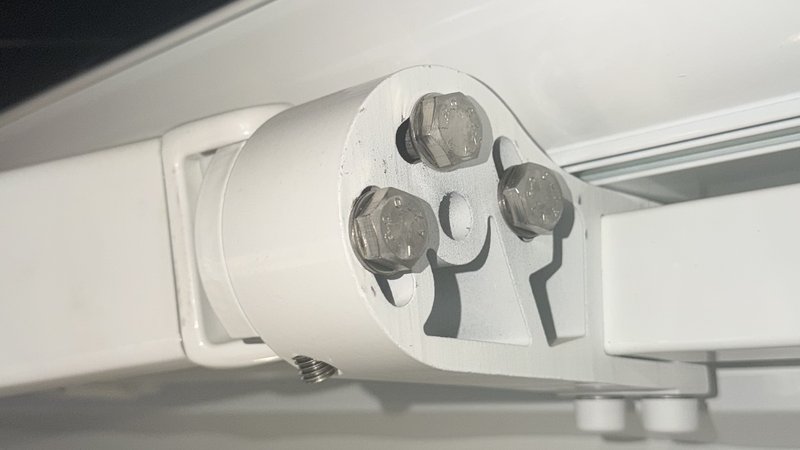
✓ Our three-bolt shoulder
Three bolts provide significantly more strength and stability—think of a bicycle with two wheels versus a tricycle with three. The load is distributed more evenly, the joint stays tight longer, and the arm tracks straighter over decades of use.
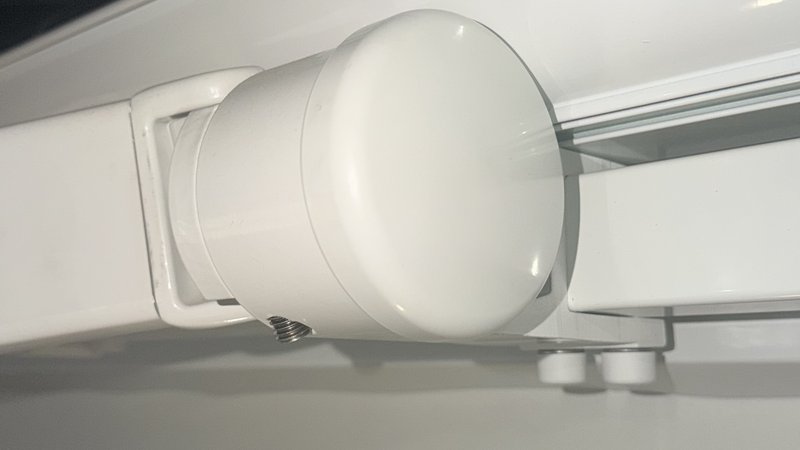
✓ Our color-matched cap
The shoulder is covered with a color-matched cap that prevents debris, insects, and moisture from getting into the joint—keeping the mechanism clean and protected. It also gives the awning a polished, finished look with no exposed bolts.
Cassette Design: What Protects the Fabric When Retracted?
When your awning is retracted, what’s keeping birds, insects, leaves, and weather off the fabric? This is where cassette design matters.
✓ Aristocrat Estate & Manor
The Estate (semi-cassette) has hood, tray, and back cover options that already do an excellent job keeping critters and weather out. The Manor (full cassette) has a larger front bar and bottom tray that completely enclose everything—sleek, modern look with no fabric valance needed.
✗ SunSetter & Marygrove
Open-style cassettes that leave the fabric partially exposed when retracted. The cassette typically doesn’t extend all the way to the wall, which means water can fall between the house and the awning. Leaves, insects, and birds can access the rolled-up fabric.
Installation: Ledger Board vs. Brackets to Siding
Arm Shoulder Hardware
This is one of those details you’d never think to check, but it tells you a lot about overall build quality. Look at where the arm connects to the mounting bar—the shoulder joint.
✗ Their shoulder — 2 small exposed bolts
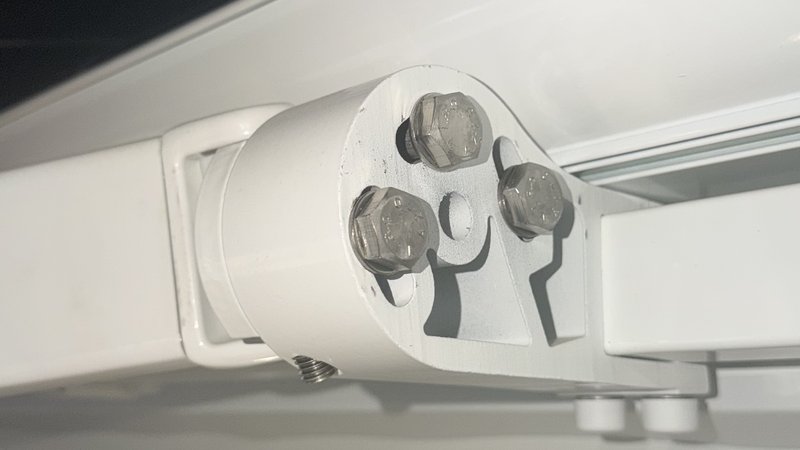
✓ Our shoulder — 3 larger bolts for added strength
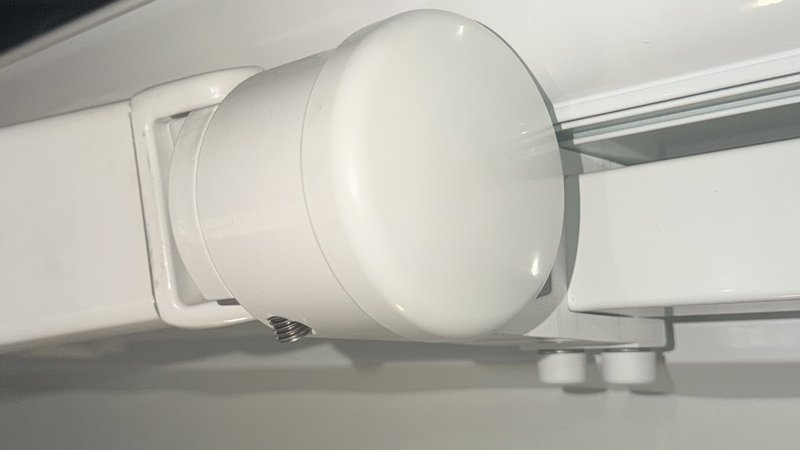
✓ Finished — clean dome cap covers all hardware
The Aristocrat Estate and Manor use three larger bolts at each arm shoulder versus the two smaller bolts you’ll find on SunSetter, Marygrove, and most budget awnings. The third bolt and larger fastener size add meaningful strength and stability to the arm connection—especially important as the awning ages and endures years of wind load and extension cycles. And all three bolts get covered by a clean dome cap for a finished look with no exposed hardware.
✓ Sunbeam Installation
We mount on a ledger board that distributes the load evenly across your wall. Takes 3–4 hours but creates a rock-solid mount. Our own trained crew—never subcontracted. We can mount to vinyl siding, brick, stucco, wood, and more.
✗ SunSetter (DIY)
SunSetter is direct-to-consumer with no professional installation included. Budget and DIY awnings typically bolt brackets directly to the house without a ledger board, which concentrates stress on a few points rather than distributing it.
Service After the Sale
This might be the most important difference of all. We’re a local company with a showroom at 5825 Clayton Ave in Pennsauken. We service everything we sell, and we can get parts for our awnings going back 25+ years. If something goes wrong, you call us and we fix it.
SunSetter is a direct-to-consumer brand—if you need service, you’re on your own or paying a local handyman who may not know the product.
We regularly get calls from homeowners who bought competitor awnings and can’t get service locally. We help when we can, including replacing fabric on most competitor awnings.
Disclosure: We’re an authorized Aristocrat dealer, so this comparison reflects our perspective based on 35+ years in the awning business. We encourage you to get quotes from multiple companies and evaluate the differences firsthand. We’re confident in what we offer.
See the Difference in Person
Visit our Pennsauken showroom to see the Aristocrat Estate and Manor in person—including a live rain gutter demonstration. Or schedule a free in-home consultation.