The most common question we get in our showroom—after price—is some version of: “Should I go with shades or blinds?” It seems like it should have a simple answer. It doesn’t. The right choice depends on the room, the light conditions, your privacy needs, whether you have kids or pets, and honestly, whether you prefer the look of fabric or wood.
Here’s how we actually walk customers through the decision.
The Core Difference: How They Control Light
Blinds—whether wood, faux wood, or vertical—control light by rotating slats. Open the slats: light comes in. Close them: privacy and darkness. The control is mechanical, immediate, and predictable. You can have full view, filtered view, or complete blockout, and you adjust it by tilting a rod or pulling a cord.
Shades work differently. They’re fabric panels that either stack at the top (roller, cellular, roman) or have vanes that rotate within a sheer fabric (silhouette, pirouette, banded). The light quality you get depends on the fabric—a sheer fabric diffuses light softly throughout the room, a room-darkening fabric blocks it, and a blackout fabric eliminates it entirely.
The key distinction: Blinds give you on/off control with some angle adjustment in between. Shades give you a broader spectrum of light quality—from soft luminous diffusion to complete darkness—depending on the fabric you choose.
Where Blinds Excel
Kitchens and Bathrooms
Hunter Douglas EverWood® faux wood blinds are the dominant choice for kitchens and bathrooms for good reason. They’re moisture-resistant (won’t warp near a sink or in a steamy bathroom), easy to wipe clean, and their slat-based construction means you can control both privacy and light precisely—important in rooms where you might want privacy without giving up daylight entirely.
Offices and Studies
The precise light control of blinds reduces glare on screens without requiring you to block out the room entirely. You can angle slats to redirect daylight toward the ceiling while blocking direct sun from hitting your monitor—a level of control that fabric shades can’t quite replicate.
Budget-Conscious Installations
For a quality entry point, wood and faux wood blinds offer excellent performance at a price point below most specialty shades. If you’re furnishing a rental, outfitting a home office, or doing a whole-house treatment on a tighter budget, blinds deliver strong value.
Where Shades Excel
Living Rooms and Great Rooms
This is where the Hunter Douglas shade lineup shines. A Hunter Douglas Silhouette® shade—with its S-curved fabric vanes suspended between two sheer panels—transforms direct sunlight into soft, diffused room light that makes the space feel warm and comfortable rather than bright and harsh. You get privacy during the day without closing off the room. It’s a fundamentally different experience than any blind can provide.
Bedrooms
For bedrooms, the decision usually comes down to blackout capability. Hunter Douglas Duette® cellular shades with room-darkening or blackout fabric are the most popular bedroom treatment we install. They provide excellent light block, add meaningful insulation to the window, and operate smoothly with top-down/bottom-up options that let you have privacy at eye level while admitting light from the top.
Large Windows and Sliding Doors
For wide openings, Hunter Douglas vertical shades—or Cadence® vertical blinds for a more structured look—handle spans that horizontal products can’t. Hunter Douglas’s Pirouette® shades are also available in very wide single-panel configurations for dramatic great room windows.
The Motorization Factor
If motorization is on your radar—and it increasingly is—shades have a significant advantage. Hunter Douglas’s PowerView® Gen 3 system works seamlessly with the full shade lineup, and the fabric-based operation is whisper-quiet and smooth. Motorized blinds exist and work well, but the Hunter Douglas shade ecosystem—with app control, schedules, scenes, and Alexa/Google/HomeKit integration—is most compelling when applied to shades.
PowerView tip: If you have large south or west-facing windows, a scheduled automation that partially closes shades at peak sun hours (typically 2–5 PM) can meaningfully reduce cooling bills without you ever touching a remote.
A Room-by-Room Quick Reference
| Room | Our First Recommendation | Why |
|---|---|---|
| Kitchen | EverWood® Faux Wood Blinds | Moisture resistance, easy clean |
| Living Room | Silhouette® or Pirouette® Shades | Soft light diffusion, daytime privacy |
| Master Bedroom | Duette® Cellular (blackout) | Light block, insulation, top-down option |
| Home Office | Wood Blinds or Roller Shades | Glare control, clean aesthetic |
| Bathroom | EverWood® Faux Wood Blinds | Humidity resistance |
| Dining Room | Provenance® Woven Wood Shades | Warmth, texture, natural materials |
| Sliding Door | Cadence® Vertical Blinds | Wide span coverage, stack back |
The Answer We Actually Give
Most homes benefit from both. Blinds in the kitchen, bathrooms, and utilitarian spaces. Shades in the primary living areas and bedrooms where light quality and aesthetics matter more. Mixing the two—with consistent hardware finishes—is the norm in the homes we work in across Cherry Hill, Voorhees, and Haddonfield.
The best way to make this decision is to see the products in your actual rooms. We bring full-size samples to in-home consultations and hold them in your windows so you can see how light actually passes through each option before you commit to anything. Here’s exactly what happens during a Hunter Douglas consultation.
See Every Hunter Douglas Option in Person
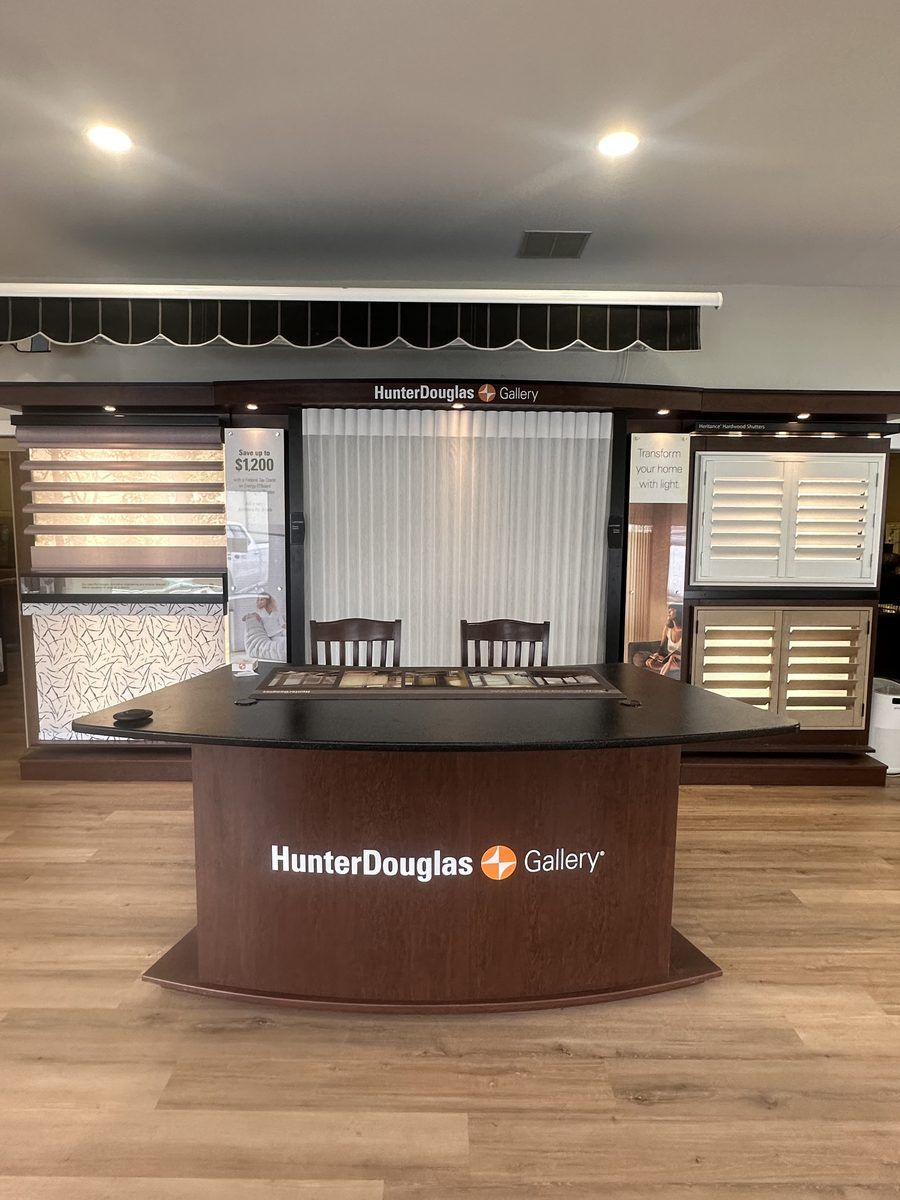
Our Pennsauken showroom has the complete Hunter Douglas lineup installed in working displays. Or schedule an in-home consultation and we’ll bring samples to you.